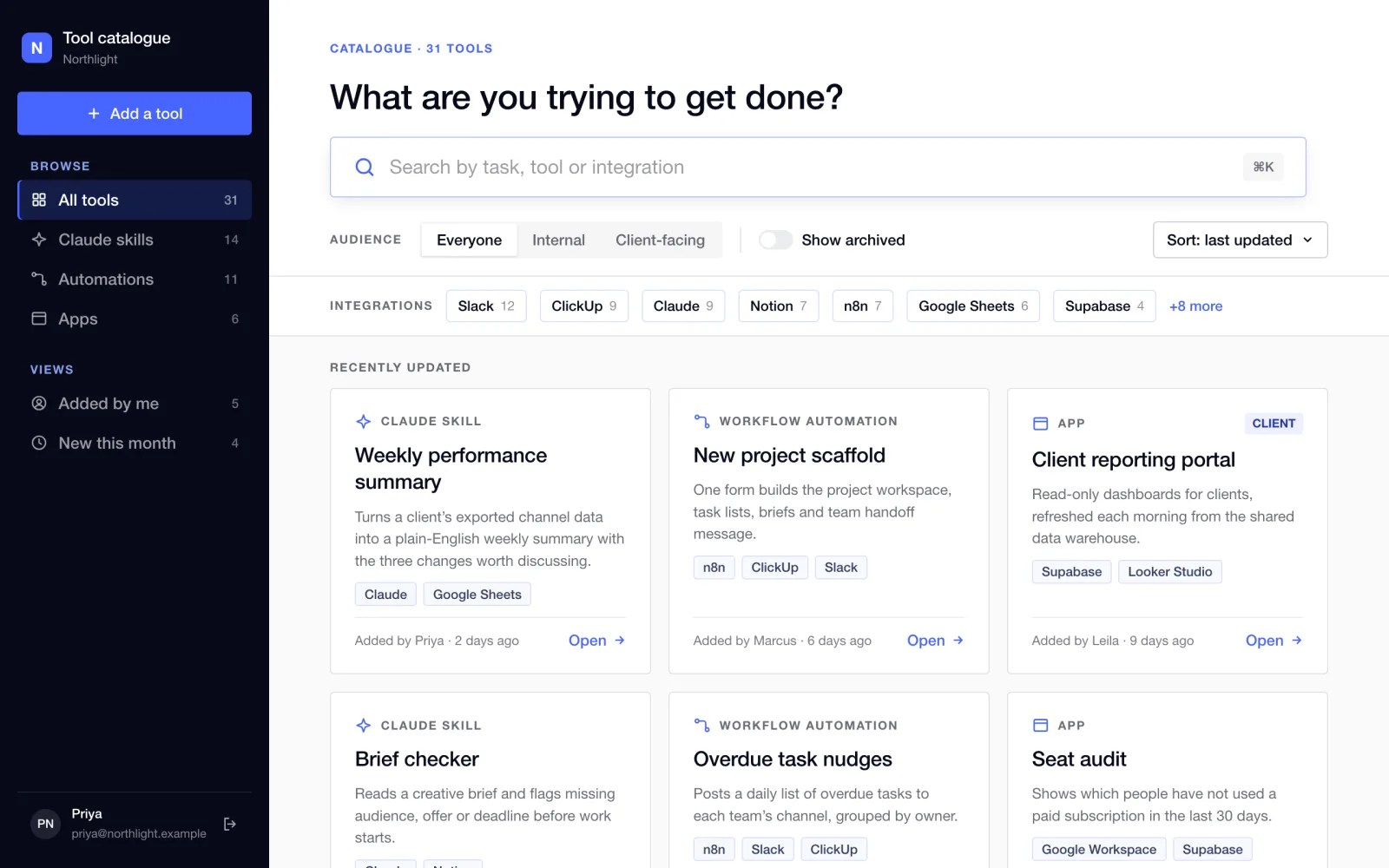
One searchable place for every automation, Claude skill and app the team has built.
3tool types: Claude skills, automations, apps
223automated tests in the repository
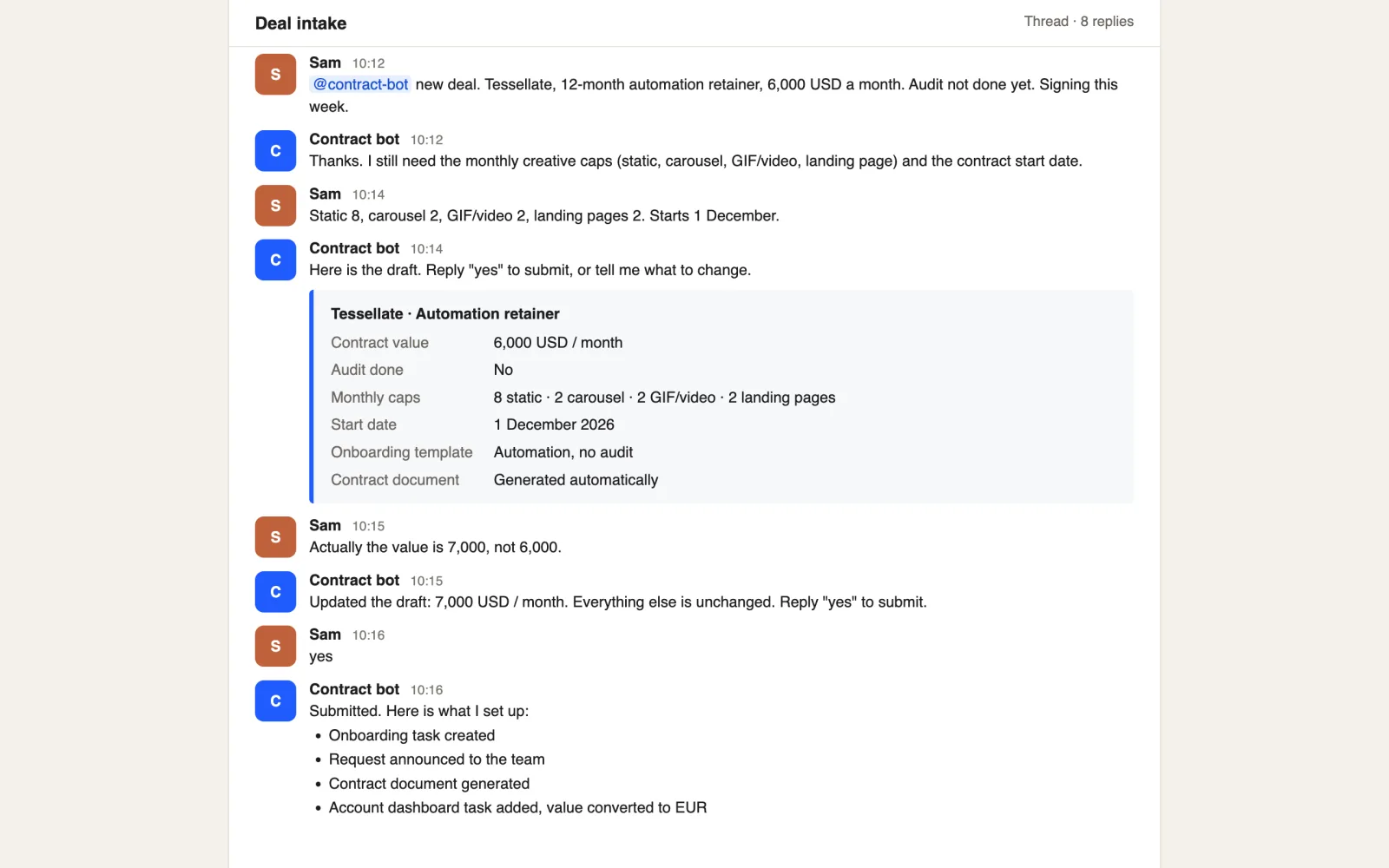
A chat bot pulls contract details out of a conversation, asks for what is missing, takes corrections and, on a “yes”, sets up the task, announcement, contract and dashboard entry.
New contracts started with a form. The salesperson filled in fixed fields, and a workflow turned them into tasks and documents. Forms cannot ask a follow-up question, accept a correction or answer “which template will this use?”. Missing or wrong details were found later.
Yash built a Slack bot on n8n. A salesperson mentions it and describes the deal in plain text. An AI model extracts the contract fields and the bot asks in the thread for anything missing. It takes corrections, answers questions about the deal and posts a summary. A “yes” in the thread then creates the onboarding task, announces the request, builds the contract document (for automation deals in USD or EUR), adds an account dashboard task with the value in euros and replies with what happened.
| Area | Before | After |
|---|---|---|
| Capturing the deal | A fixed form | A conversation that asks for what is missing |
| Corrections | Start again or fix downstream | Say what changed in the thread |
| What gets approved | Whatever the form held | The exact saved draft shown in the summary |
| Questions | Ask someone in ops | Asked and answered in the thread |
The bot recognises five kinds of message: update, approve, cancel, question and chit-chat. One approval sets up five things that were handled separately. No time or error reduction has been measured, so none is claimed.
The bot is live, but no before-and-after timing has been measured. The value claimed is the five set-up steps one approval now covers, not hours saved.
Every summary saves its exact deal to a data table, and approval submits that saved copy. Rewording by the AI model cannot change what was approved. The draft is marked submitted before anything is created. Nine scenarios passed in simulation with the real AI models running, including corrections, cancellation and a change request after submission. A live run created a real task correctly, then was cleaned up.
Rebuilt chat thread. Company, people and figures are fictional.
If requests arrive as free-text conversations and are re-typed into a form, a bot that reads the conversation and confirms before it acts can save the re-typing.