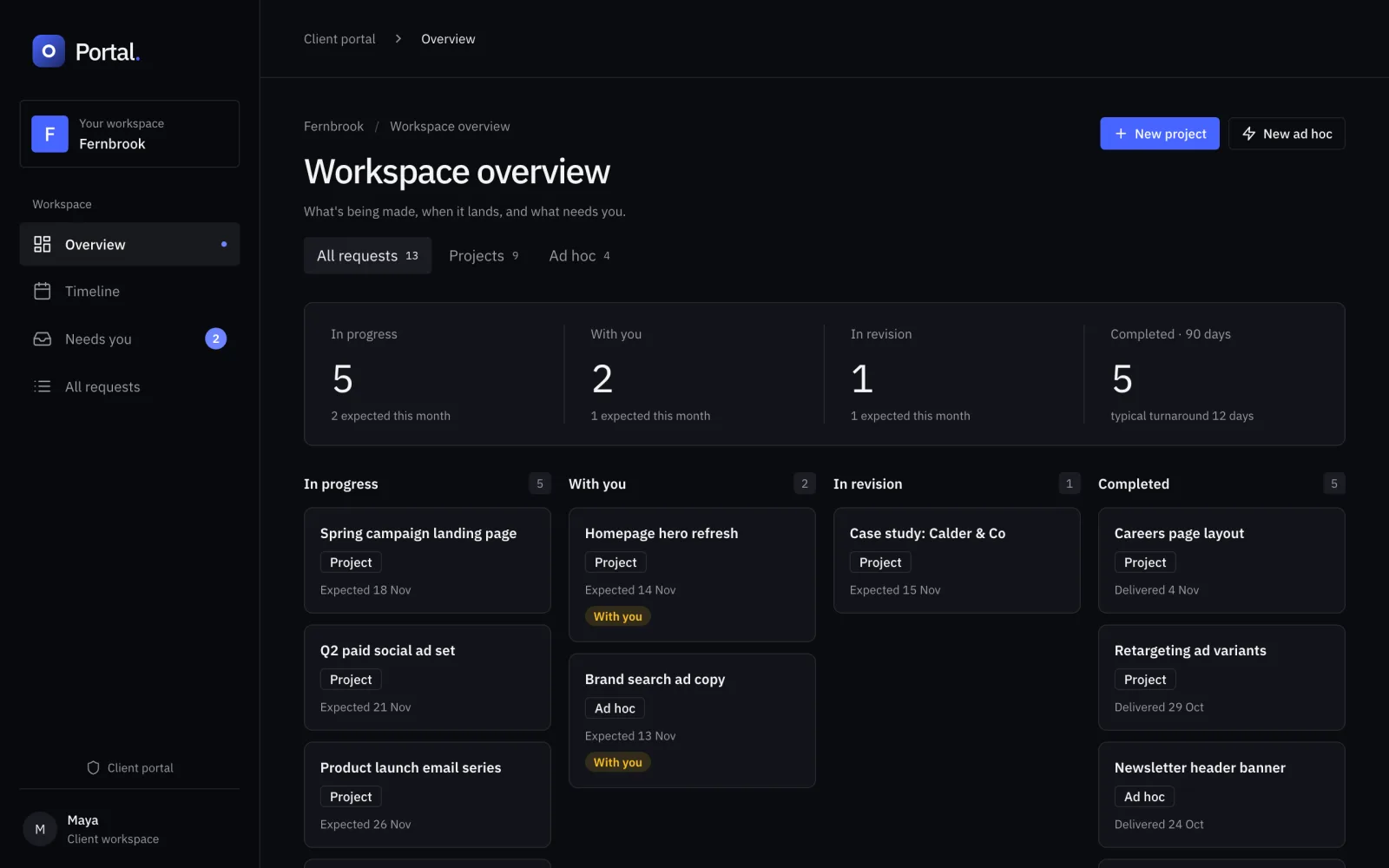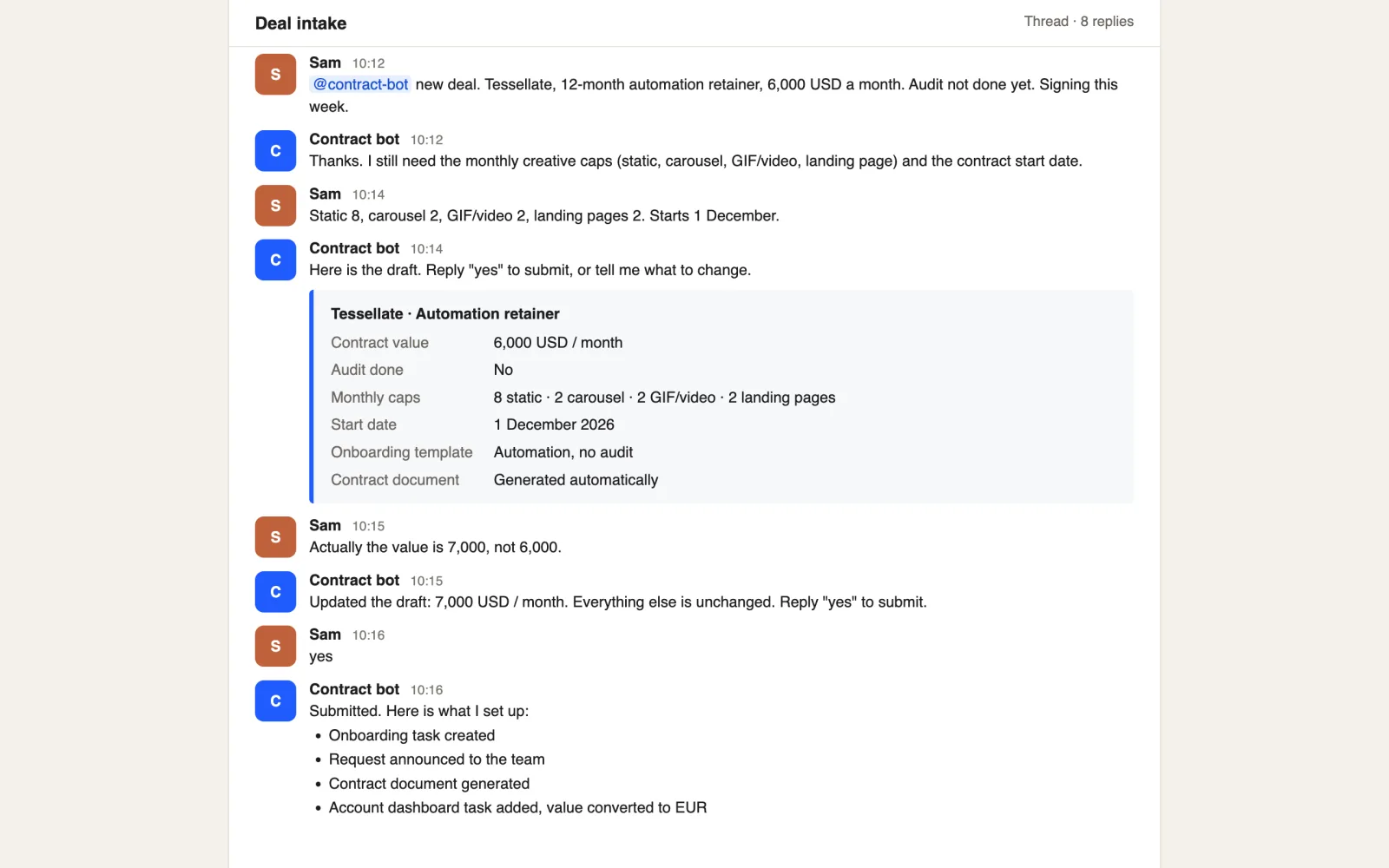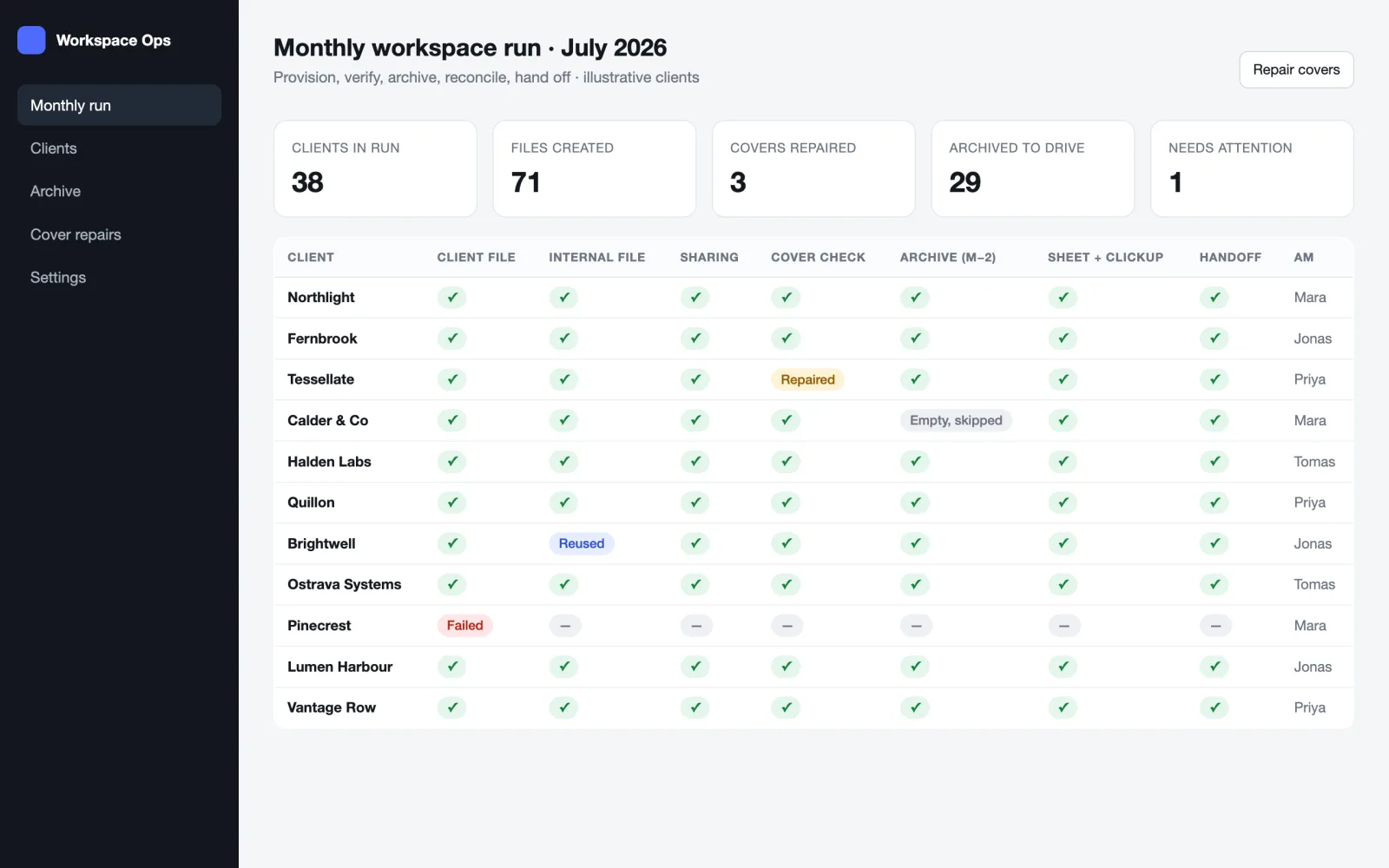
A monthly design-workspace reset for 38 clients, run from one command.
38clients mapped to the monthly run
34 of 38fully provisioned in the first supervised pass
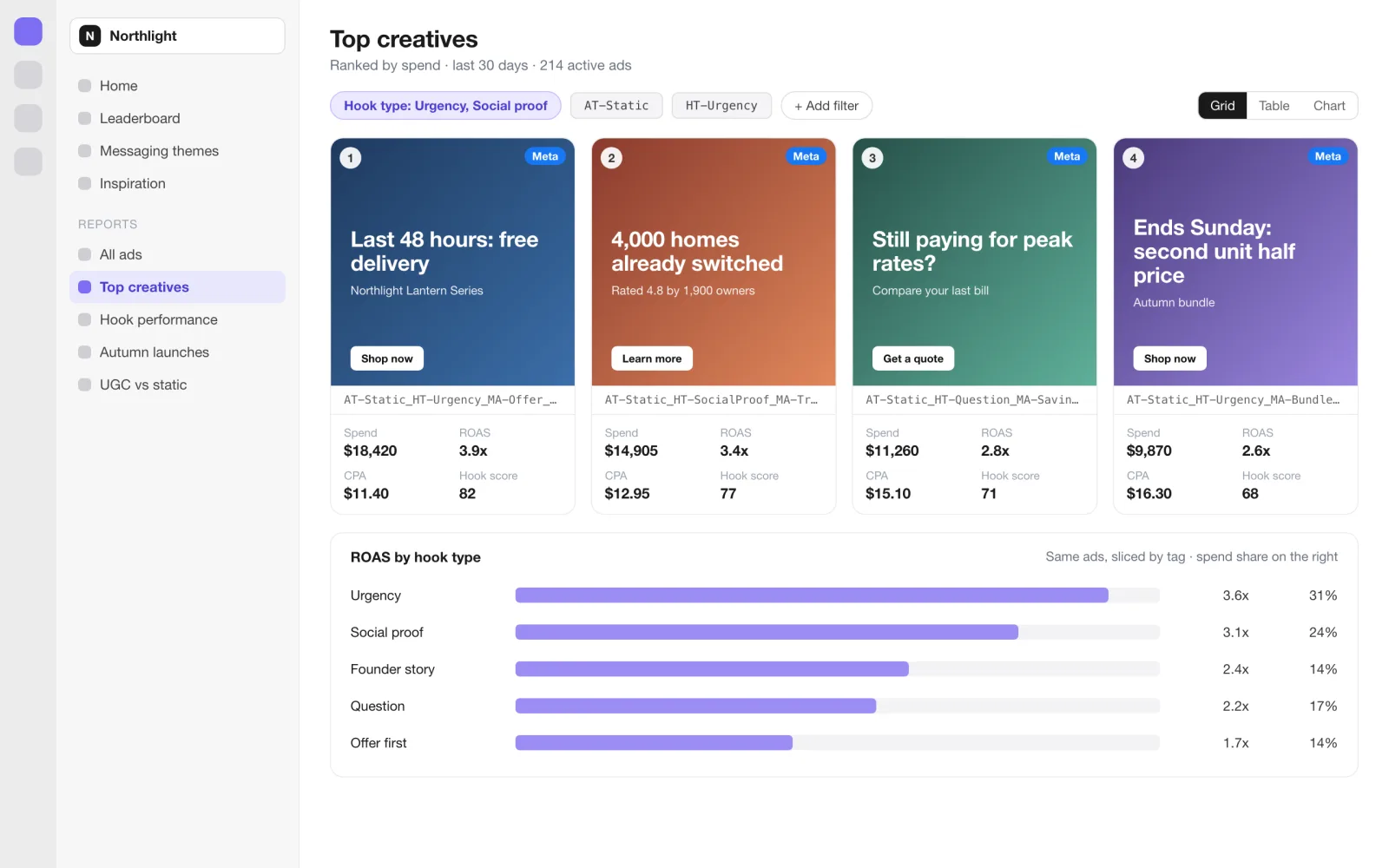
Every ad is tagged by hook, angle and format, so performance can be sliced the same way for every client. Data syncs nightly, and a shared inspiration bank sits alongside.
Creative insight lived inside each client's own ad account. Nobody could ask which hooks, angles or formats win across the whole book. Commercial creative-analytics tools priced by ad spend, and none offered a cross-client view, so the team weighed building its own.
The team built an internal creative-analytics app. A nightly job pulls ad-level data from the agency's marketing-data platform into its own database. Each ad carries a structured tag (ad type, hook, messaging angle, audience, season), and reports are grouped and filtered by those tags.
Yash co-built it with another engineer. His work covers the inspiration bank and the link resolver behind it, the alerts that tell the team when a sync breaks or a source is misconfigured, and hardening of the monthly client-report module.
| Area | Before | After |
|---|---|---|
| Creative insight | Siloed by client and platform | Ads tagged and sliced the same way for every client |
| Data refresh | Manual exports | Nightly sync, with alerts when a source fails or is misconfigured |
| Inspiration | Links and screenshots scattered across tools | A searchable shared bank that captures ads from 9 kinds of link |
| Client reporting | Built by hand each month | A monthly-report module that drafts from live data and checks its own draft |
The nightly sync and the inspiration bank are in production. The team now has one tagged, queryable record of creative performance that it owns, instead of insight that disappears when an account manager moves on.
This is a capability, not a measured uplift. No campaign-ROI gain or tool-cost saving is claimed. The original plan targeted 40+ clients; about 22 clients with a connected Meta account are in scope today.
The build-versus-buy brief came first, with alternatives, cost projections and explicit non-goals. The sync re-reads the last three days each night because ad platforms restate recent figures, and one failing source never stops the others. A separate alert covers sources that sync but are missing fields. Client data is limited to campaign and creative performance, with no end-user audience data.
Screens are rebuilt from the real interface. All names and figures are fictional.
If you manage creative across many accounts, a shared tagging scheme makes the whole portfolio easier to learn from.