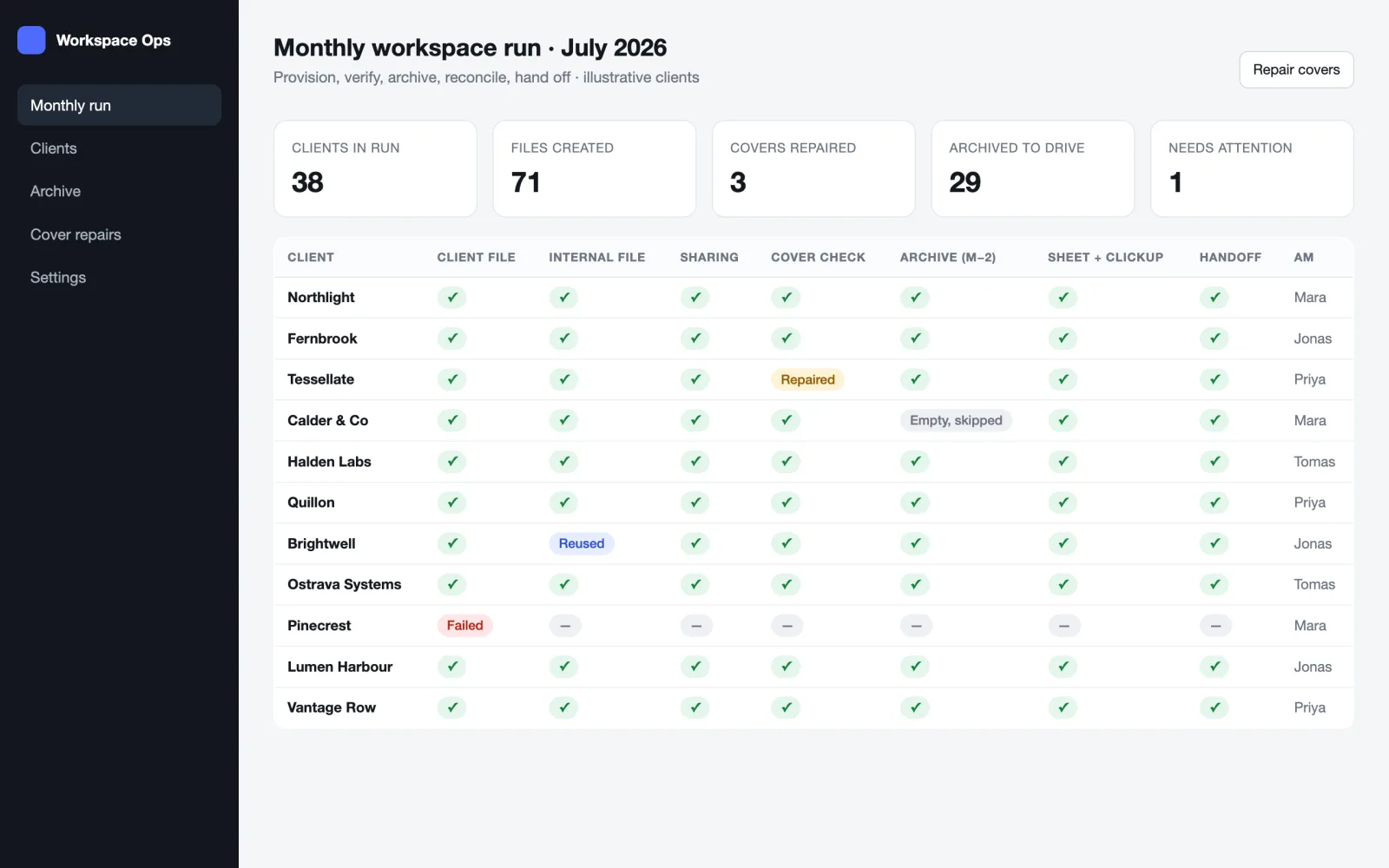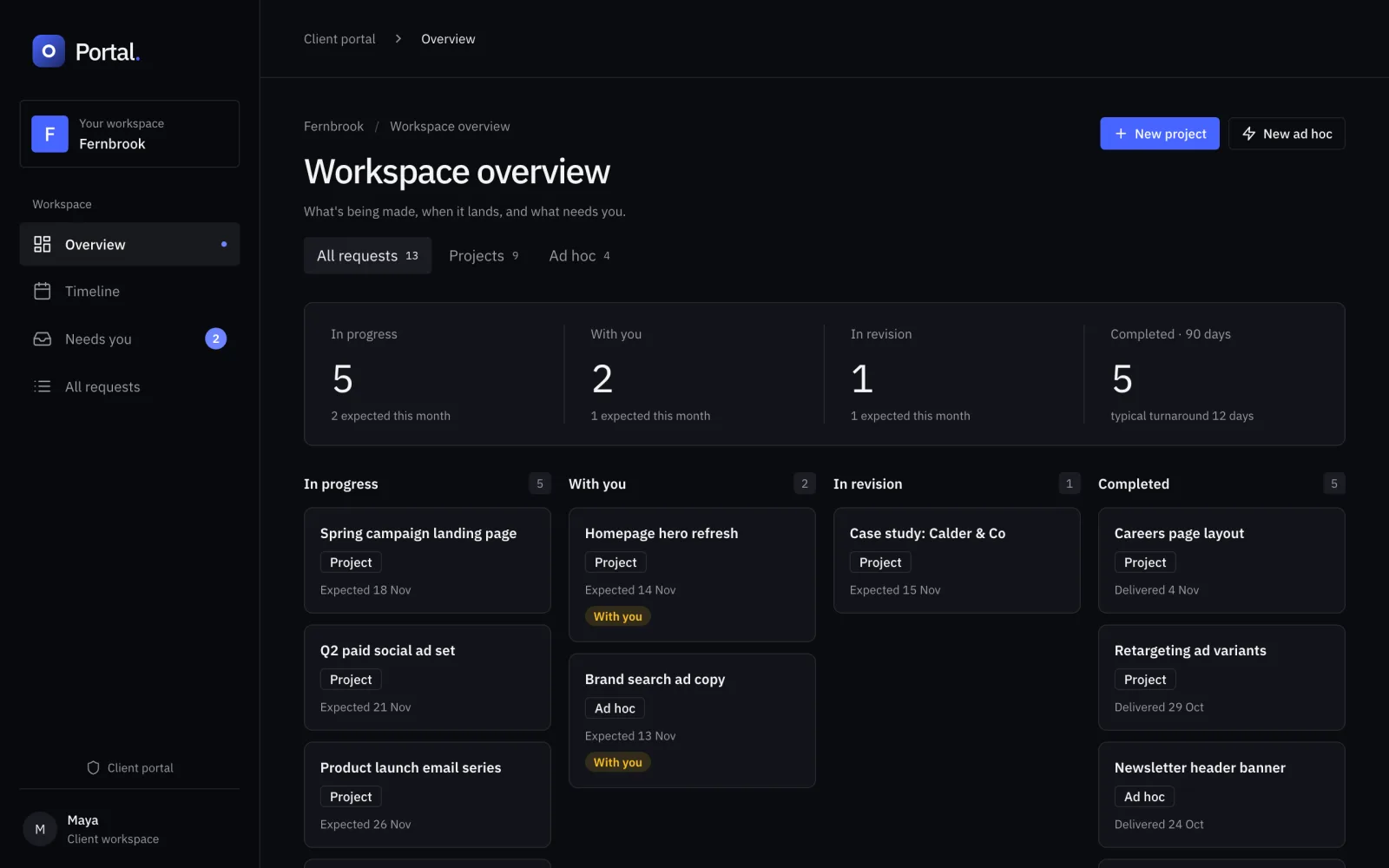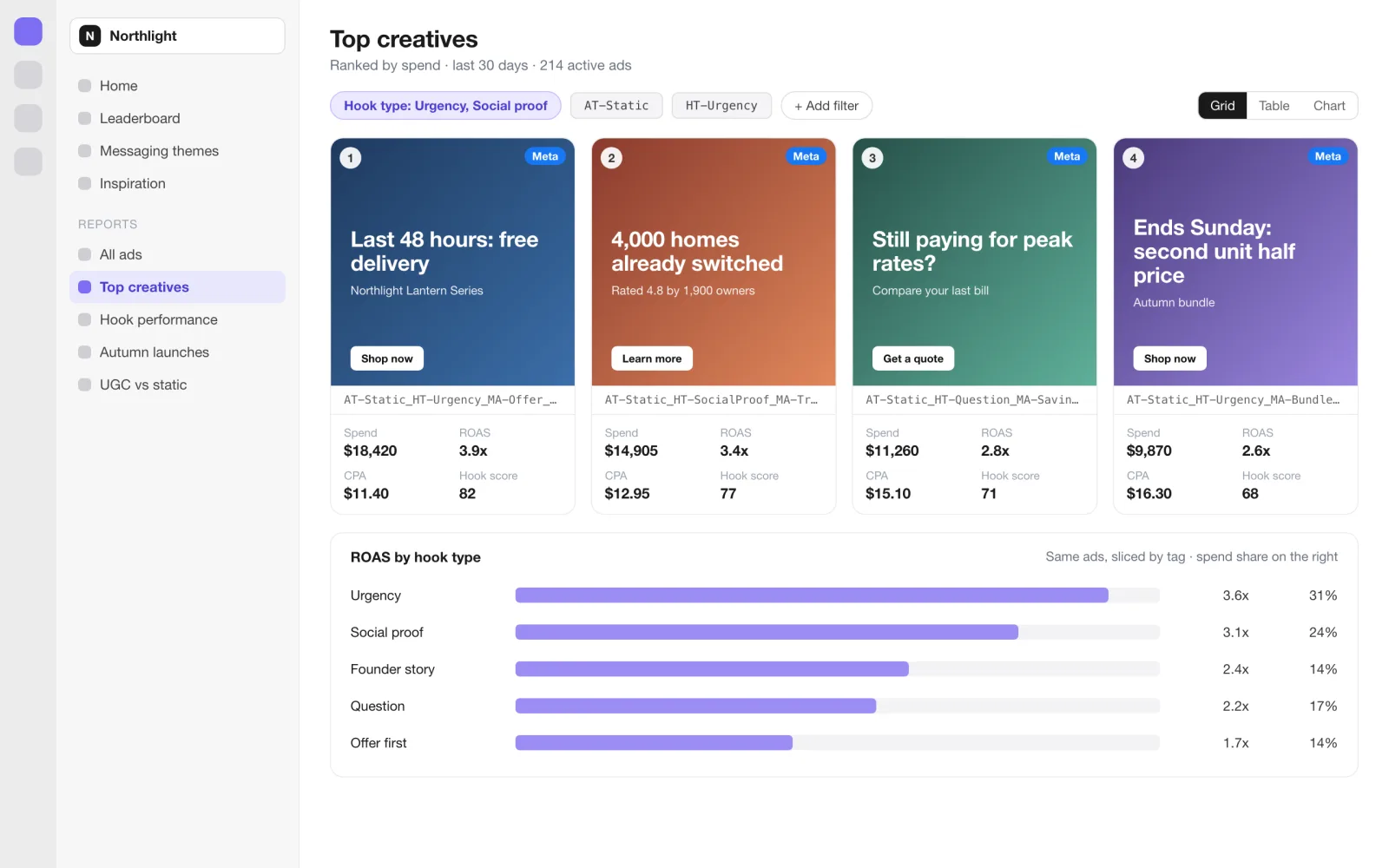
One place to see which ads work across the client book, and to save the ones worth copying.
~22Meta-connected clients in scope (est.)
9link types the inspiration bank can capture
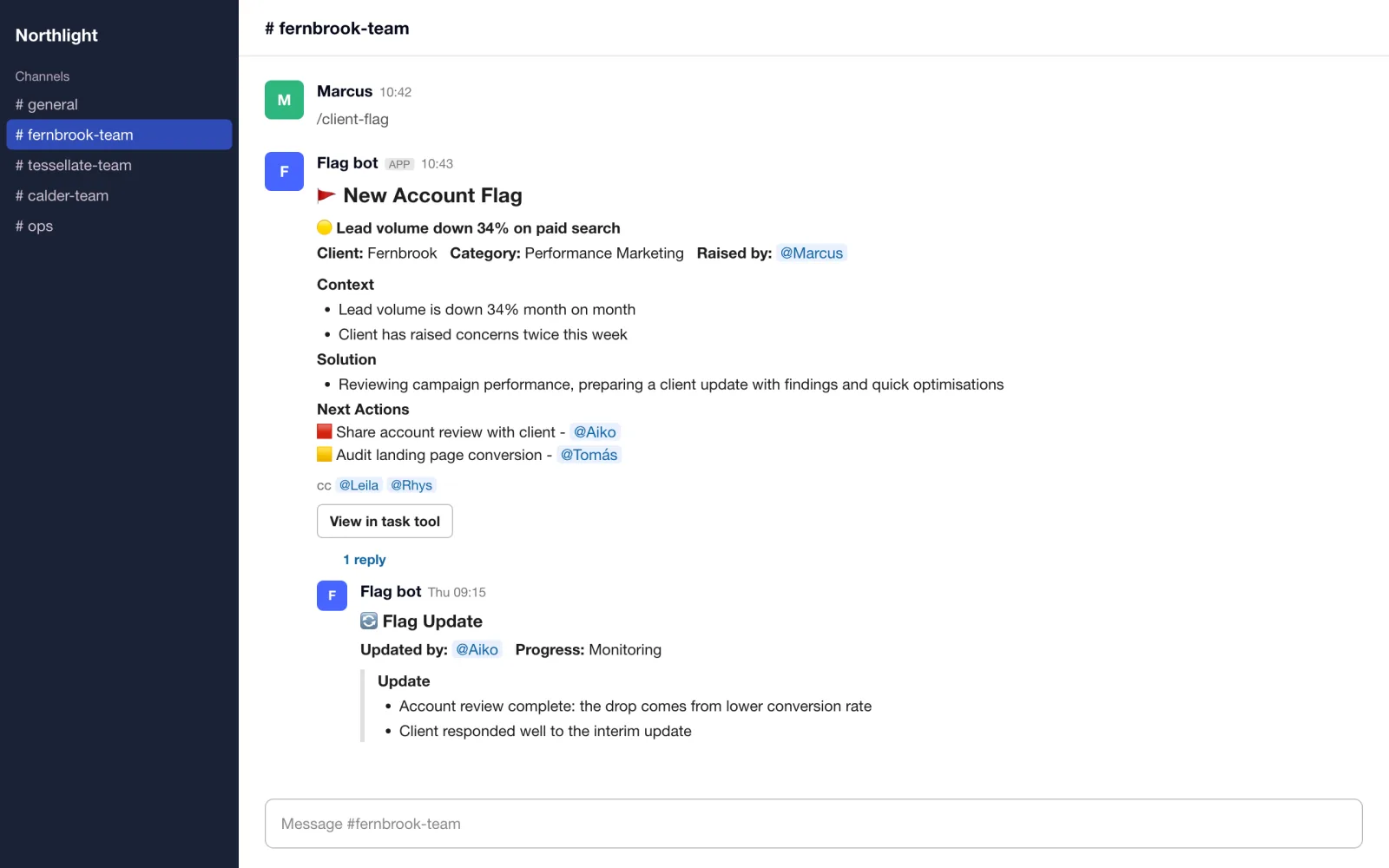
A chat bot turns a short form into a structured account flag. It posts to the client channel, creates the task and keeps one thread updated until the flag is closed.
When a client account hit trouble, the signal lived in chat messages. Who raised it, what was being done and how it ended were hard to find later. Learnings from closed issues were rarely written down in one place.
Yash built a chat bot with one slash command. It opens a form with four choices: raise a new flag, update an existing flag, close a flag, or mark a client as churned. A new flag records the client, a colour (red, yellow or green), one of five categories, the context, the solution and next actions by priority. It posts a formatted message in the channel, creates a task in the team's project tool and saves the thread link on that task.
| Area | Before | After |
|---|---|---|
| Raising a problem | Free-form message | One form with the same fields every time |
| Who is told | Whoever happened to see it | The account's lead and customer success owner are looked up and tagged, plus anyone chosen |
| Progress | Scattered replies | Updates post into the original thread as In progress, Monitoring or Resolved |
| Closing | Quiet fade | A resolution, outcome and key learnings are recorded, on the task and in the thread |
Each flag becomes a task with an owner, a colour and a history, and each closure leaves written learnings. The same record covers both resolved issues and lost clients.
The source holds no counts of flags raised or time saved, so no figures are claimed. The value is consistency and a searchable record. The screens use made-up clients and people.
The bot refreshes its client and task lists from the project tool every 30 minutes. If that connection fails at start-up, it says so in its log and tells users instead of failing silently. A missing thread link or a failed reply never blocks the update itself. It runs as a managed service on a cloud server, using a persistent connection to the chat tool, so it needs no public web address. Deployment steps and a warning against running a second copy are written down.
Rebuilt screens in a generic chat style. All clients, people and figures shown are fictional.
If problems on accounts are raised in chat and lost, a short form that writes to your task tool and keeps one thread per issue can give you a record without changing how people work.