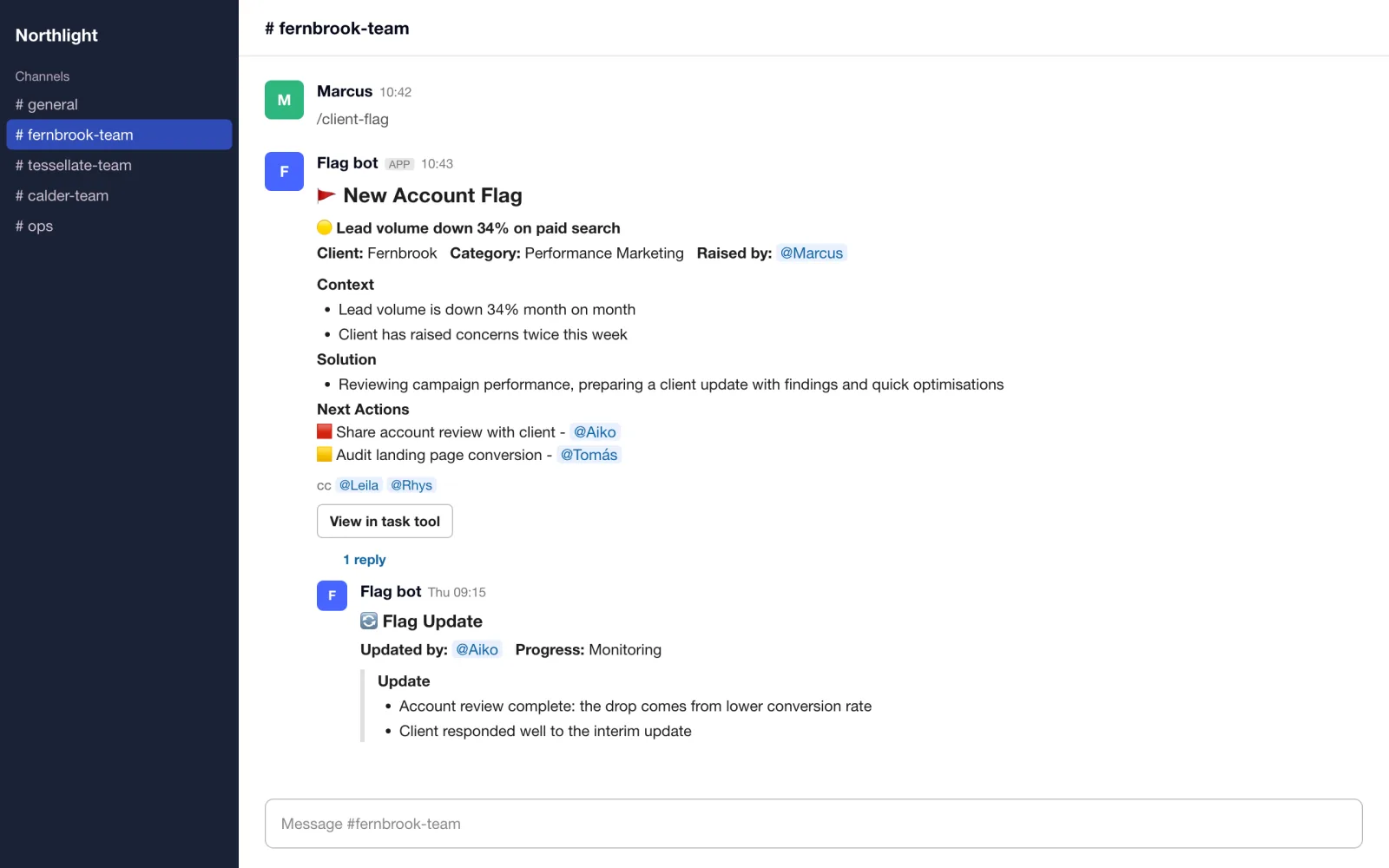
Account problems get raised, tracked and closed from the chat channel the team already uses.
4actions: raise, update, close, client churned
3flag colours: red, yellow, green
A Google Sheets add-on totals the creatives a brief asks for, compares them with the client’s monthly cap and logs the submission. Over-cap work goes to the account manager instead of straight to design.
Each client buys a set number of creatives a month: statics, carousels, GIFs or videos, landing pages. A brief lists what the team wants made. Checking it means adding up the brief and everything the client’s other briefs have already used that month. It was a manual sum, done brief by brief.
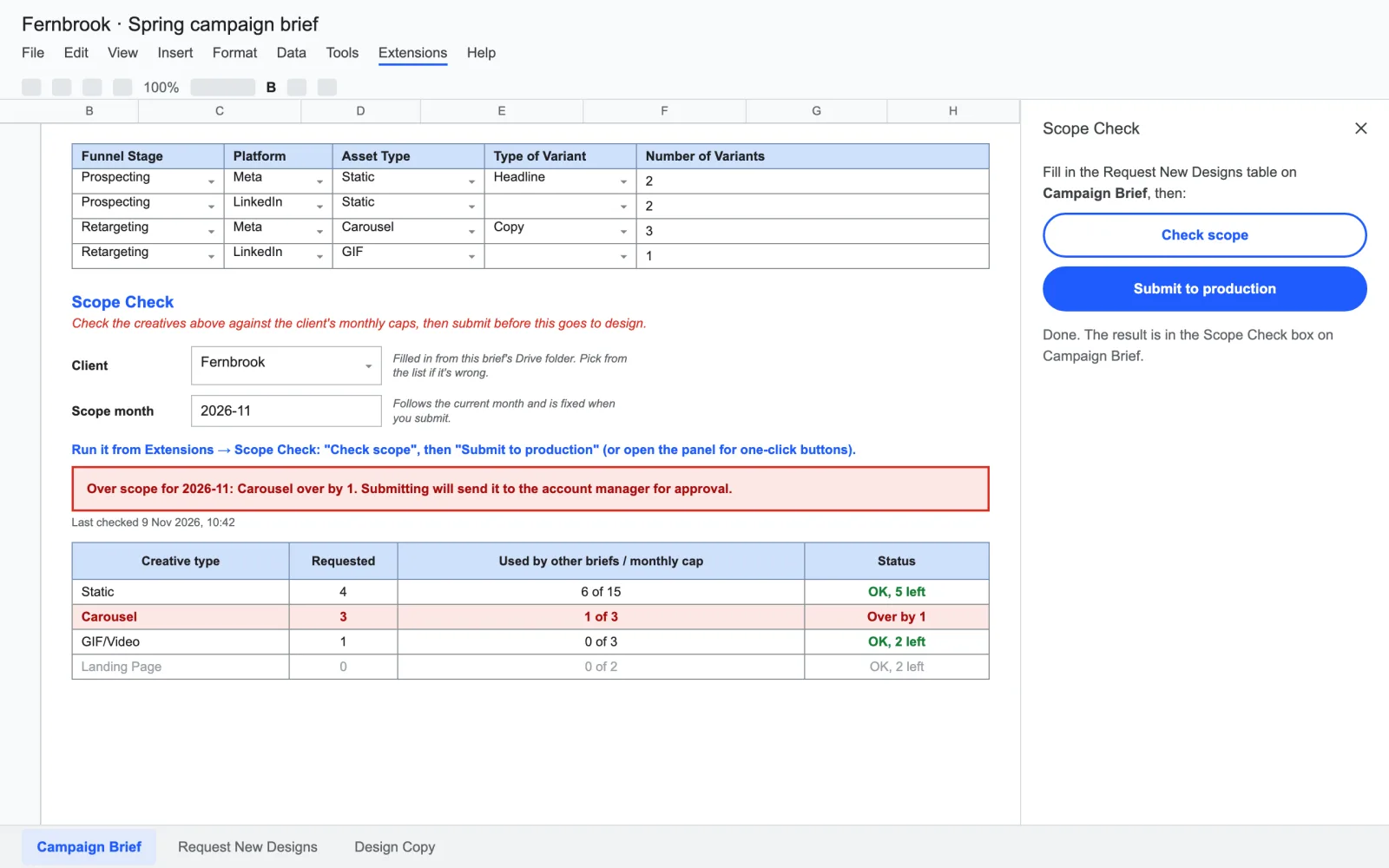
Yash built Scope Check as a Google Sheets add-on. The project manager runs it from the sheet’s Extensions menu or a side panel. It reads the request table, looks up the client’s caps in a master workbook, subtracts what other briefs have used and shows the result under the table. Submitting logs one row per creative type to a central ledger. If the brief is over cap, a Yes/No prompt sends it to the account manager as pending approval.
| Area | Before | After |
|---|---|---|
| Cap check | A manual sum, brief by brief | One click, against the client’s monthly caps |
| Over-cap briefs | Relied on someone spotting them | Flagged, then pending account manager approval |
| Record of requests | Spread across individual briefs | One ledger row per brief and creative type |
| Sign-in | Each brief carried its own script and an authorisation prompt | One private add-on, installed once for the whole domain |
The check covers five creative types and counts only live work: rejected and superseded ledger rows are ignored, so a resubmitted brief does not count against itself. The add-on went live for the whole company on 5 November 2026. No time saving is claimed, because nobody tracked how long manual checks took.
The value is control more than time: over-cap work is seen before design starts, and every submission leaves a record. Try your own volumes in the savings calculator.
The logic is tested away from the sheet. One suite has 21 assertions and an adversarial suite has 50 checks: 47 pass and three document known limits, such as a time-zone edge case on ledger dates. The add-on asks for four permissions, each with a stated reason. Before the switch, the old script was backed up.
Rebuilt interface of the add-on. Client, figures and brief content are fictional.
If a monthly allowance lives in people’s heads and a spreadsheet, a small check at the point of submission can keep it honest without a new system.