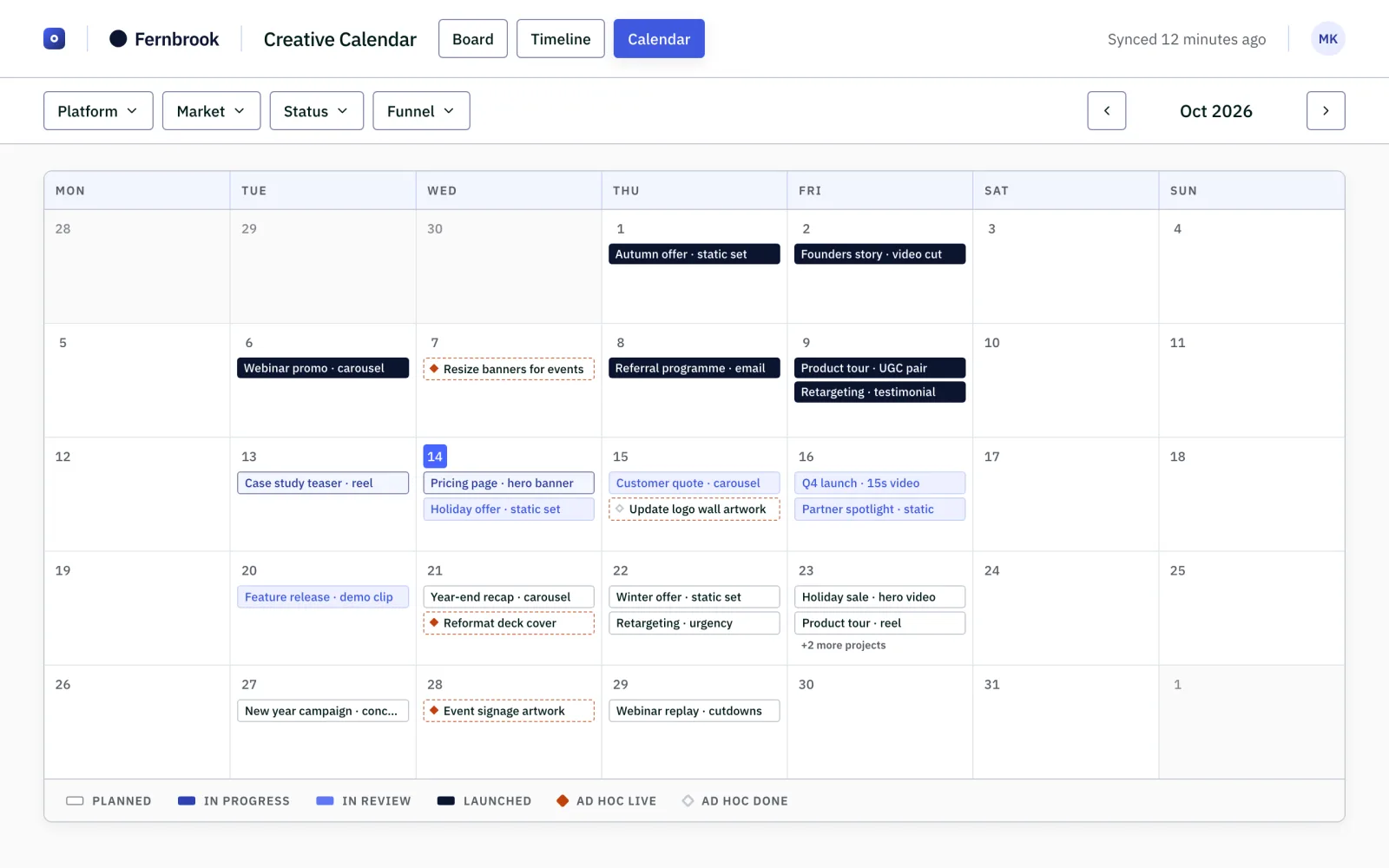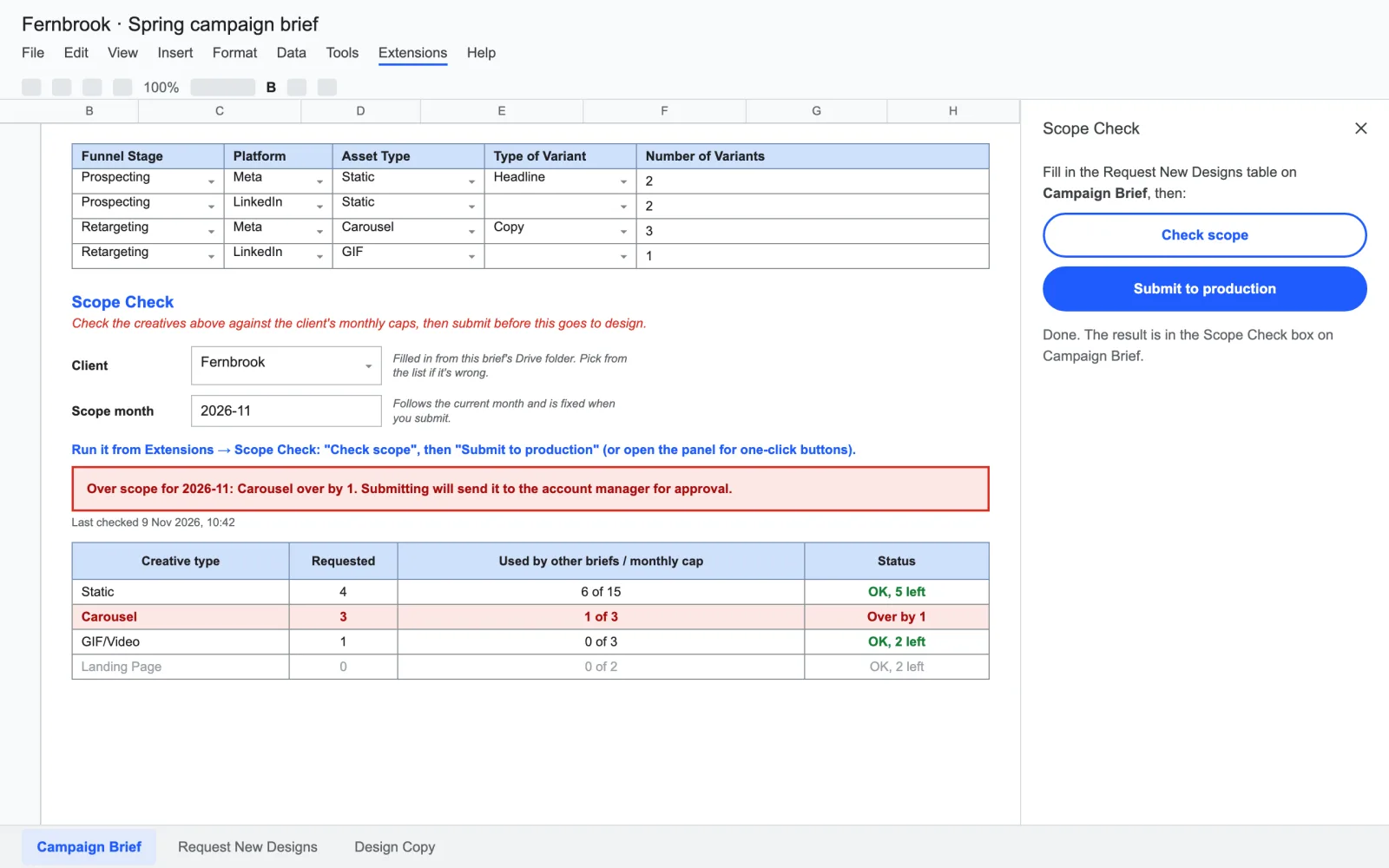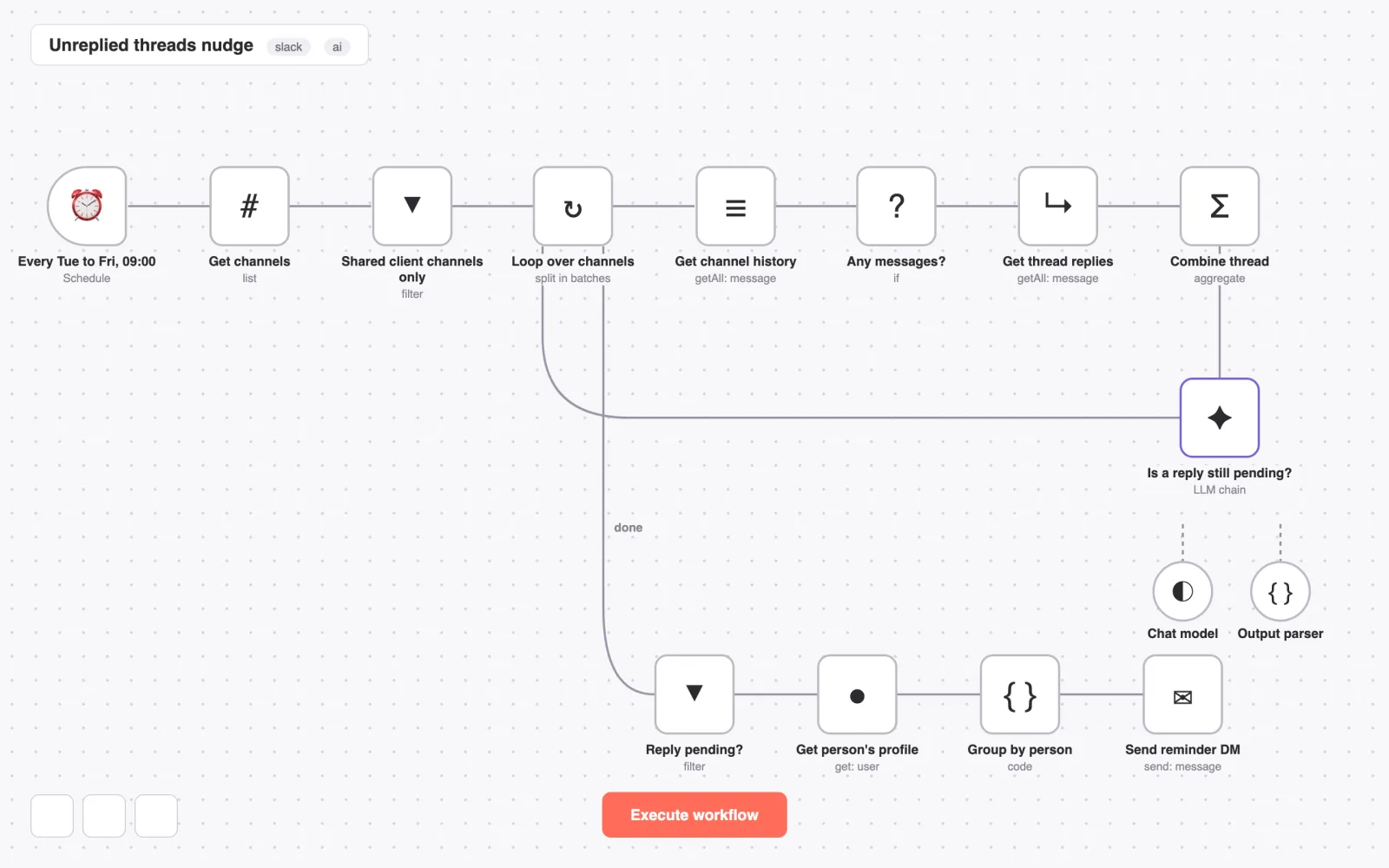
48 live workflows. Routine work on its own triggers.
48active n8n workflows
1,875nodes across the n8n estate
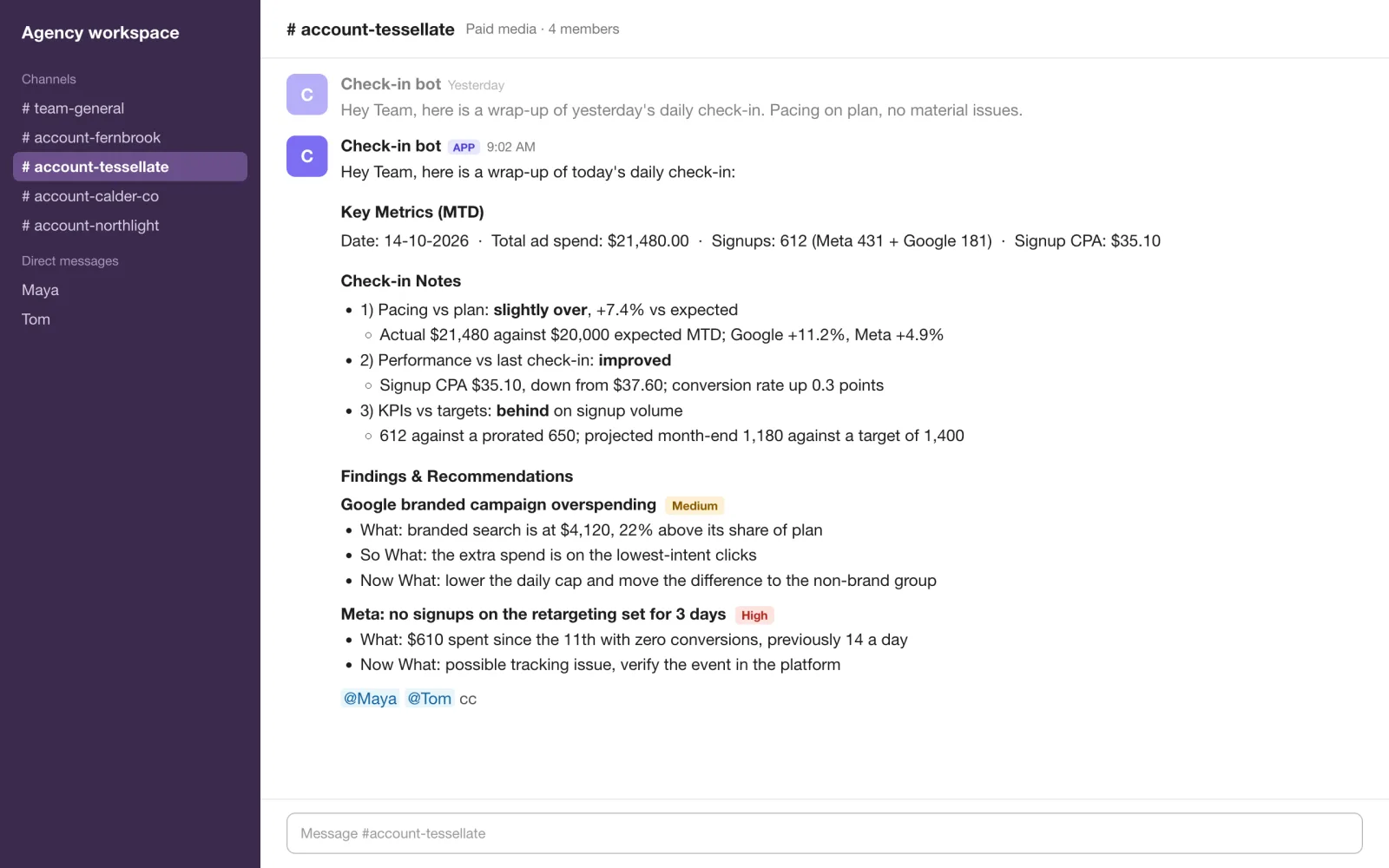
Each account gets a daily wrap-up: key numbers, pacing against plan, change since the last check-in, and findings ranked by priority, with the marketers tagged.
Daily account checks were manual, varied from analyst to analyst and left no record of what had been flagged. Asking a language model to read a dashboard would add a new risk: a spend figure that drifts or is invented is not acceptable in client work.
Two versions of the same check-in exist. The first is a workflow that runs when someone asks in a client's chat channel. It pulls the account profile and tasks, the media-plan sheet, the last three check-ins and any open client flags. It then writes the wrap-up in the thread and tags the two marketers on the account.
The second is a Claude command that runs the full 18-check catalogue against live ad data and writes each day's report to a client document. It never posts to chat. Yash also worked with an open-source Google Ads connector for AI agents, adding account-hierarchy discovery and a fallback for accounts shared outside the manager account.
| Area | Before | After |
|---|---|---|
| Daily checks | Different analyst routines | One written checklist, applied the same way to every account |
| Reporting | Ad hoc messages | One fixed format: metrics, three notes, findings ranked High, Medium, Low |
| History | Trends lost in conversation | Each check-in compares itself with the previous one |
| Client concerns | Remembered by whoever was on the account | Open client flags are read in and answered by name |
The chat workflow is active. The check-in format, thresholds and checks are written down, so a new marketer gets the same review as a senior one.
No time saving or performance lift is measured here. The value is consistency and a record. The Claude command is run on demand by a marketer, not on a schedule.
Pacing uses one fixed formula: plan multiplied by days elapsed over days in the month, with a 10% tolerance. A channel held at zero in the plan is treated as an intentional pause, not a finding. An issue already raised and unchanged is referenced, not repeated. The prompts forbid altering a reported figure and require every claim to cite a number. Where the data cannot show something, such as ad approvals, the report says so instead of implying all is well.
Screens are rebuilt for illustration. All accounts, names and figures are fictional.
If your team repeats the same account checks every morning, writing the checklist down and automating it gives you a consistent, reviewable daily record.