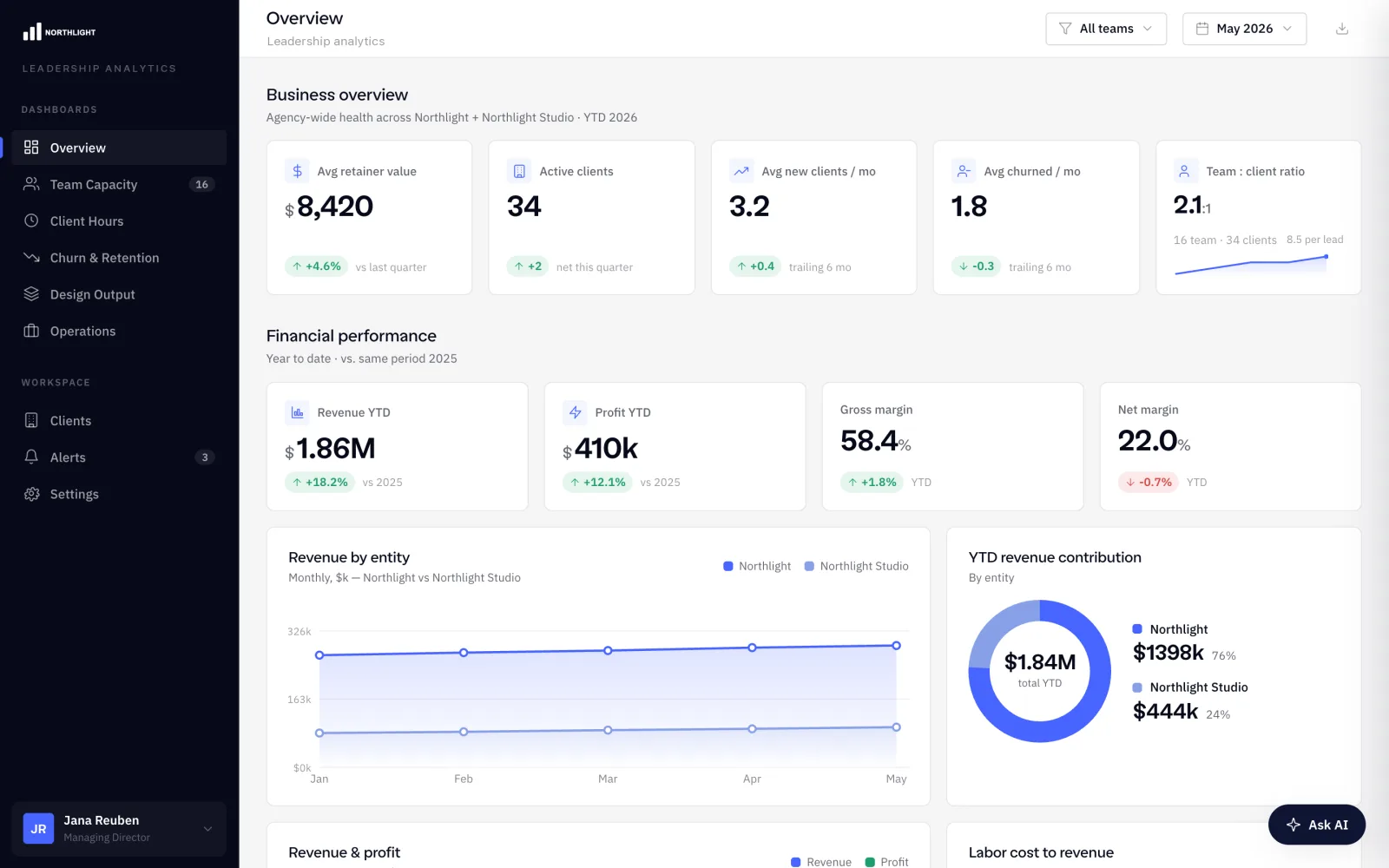
Six systems. One set of numbers to run the week on.
6 → 1source systems combined into one view
304,719time-entry rows checked for collisions
A form submission now creates the project, documents and team handoff. Delivery starts with a consistent workspace instead of an hour of copying.
A project manager read each new request, identified the service and hand-built the ClickUp structure: lists, tasks, custom fields, owners, brief documents and the Slack handoff. It took about an hour, and different people built projects differently. Downstream reporting needed manual reconciliation because the structures did not match.
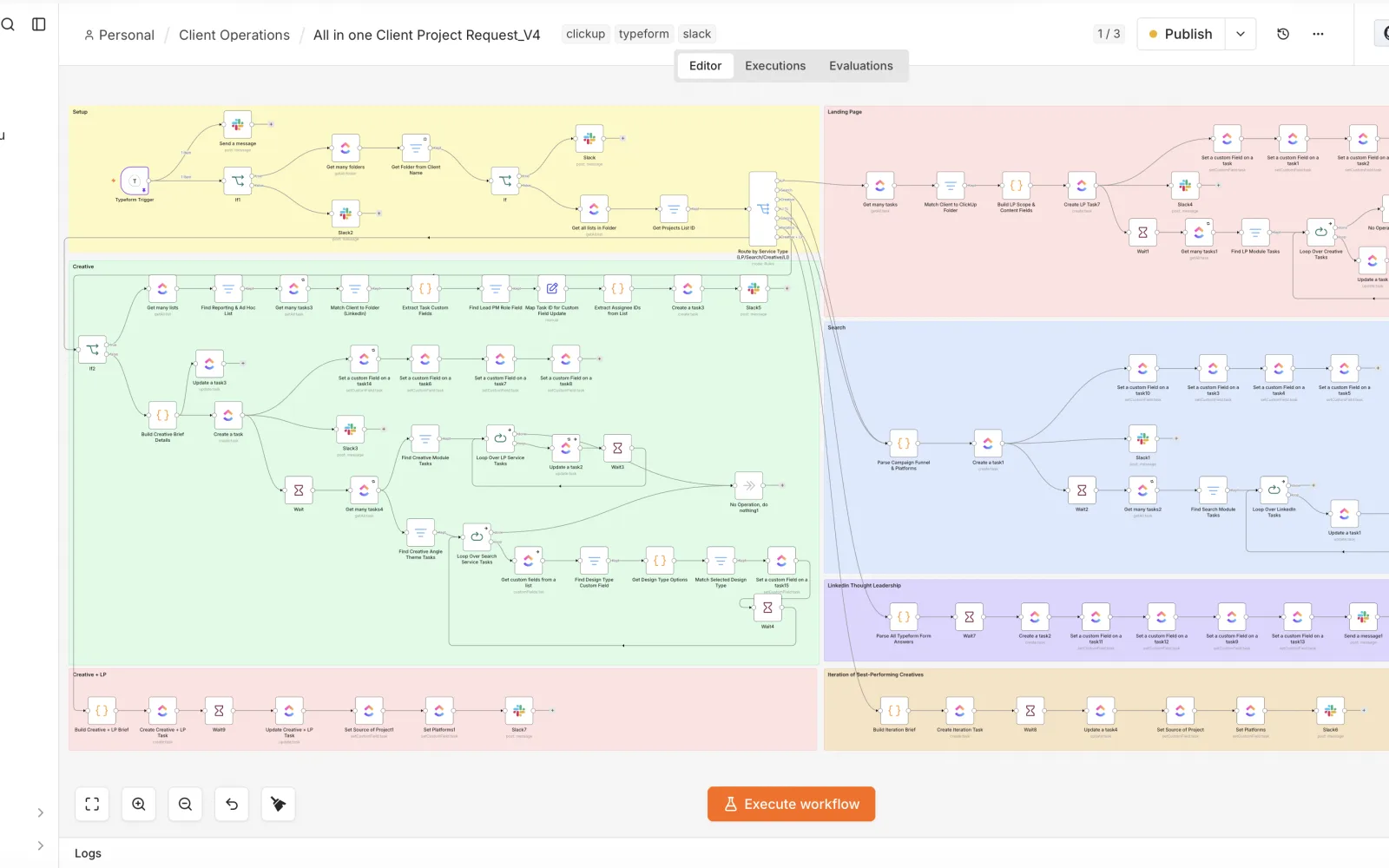
Yash built a single form-triggered n8n workflow with seven service branches. Each branch owns the correct fields, briefs, assignees and handoffs. Shared setup and API handling stay together instead of drifting across seven separate automations.
| Area | Before | After |
|---|---|---|
| Project setup | About one hour of manual copying | One form builds the project scaffold |
| Consistency | Different field names and task shapes | A repeatable structure for each service |
| Failed submissions | Risk of a workspace that only half-builds | Explicit error routes with the submission attached |
About one hour of manual setup is removed per new project. The live workflow has 95 nodes, seven labelled service branches and 16 branch points. It evolved through four iterations, with exported JSON kept in version control.
About 20 new projects a week came through the form, so roughly 20 hours of project-manager time came back every week: about half a full-time role. Both figures are the team’s estimates; try your own numbers in the savings calculator.
ClickUp field labels can change, so the workflow addresses fields by stable UUID. API calls are batched against rate limits with explicit timeouts. Eleven nodes have explicit error handling, and failed submissions reach a dedicated Slack channel with their payload intact.
Actual project-request workflow in n8n. Open the full canvas below to explore the implementation.
If every new client or project starts with rebuilding the same workspace, this is a practical place to win time back and make delivery more consistent.